The Death of Print Media

ARCH 346: Anthropology of Design
By Evan Kirkiles

My final project for ARCH 346 is a design response exploring the concept of the death of print media. The main body of the project is less the content in the zines than the CSS layout framework seen on this page that allows printing zine impositions directly from the browser. The goal is to straddle the line between digital and print publishing, creating a unified format that can exist both on the web and in printable book form without additional labor.

Since the inception of digital publishing, print publishing has been in decline. This project investigates a technical manner by which print and digital might be merged in a democratic, distributable manner. Naturally, I do not expect to match the massive featureset of an enterprise tool like InDesign—rather, I envision this project as a zine publishing framework. Zines have historically been produced by communities with minimal resources and a DIY attitude, for which the portability of a website-based typesetting program would be quite useful.


Instructions

For best print output results, please use either Chrome or Firefox. Enable backgrounds, but disable headers and footers. Pick any page size or orientation you wish and the framework will attempt to morph its content to match. Sample outputs can be found on the right.

To fold and assemble the zines, follow the below guide:

[0] Introduction

ARCH 346: Anthropology of Design

The Death of Print Media

Evan Kirkiles, Spring 2024

This compilation of zines is a capstone design response for ARCH 346: Anthropology of Design. It encompasses two topics under the umbrella title of "The Death of Print Media":

  1. An Abridged History of Printing
  2. Print Media is Dying

Importantly, these zines were designed entirely with HTML and CSS, printable directly from the website they are distributed on. Each is an 8-up zine, functioning as bite-sized, digestable pamphlets on their topics.

Unlike expensive, enterprise-built design software like InDesign, the languages of HTML and CSS—as open source standards—defy traditional monetary boundaries. Every computer-wielding person has access to these tools—and the free nature of the web means distribution of web-print zines also comes at zero cost. This zine itself can be printed directly from its webpage.

With this set of zines as example, I hope to provide a basic, democratic framework for simple 8-page zine layout with HTML and CSS.

In keeping with the open nature of the Web, the code used for building the zines in this manner is entirely public. Future work will be done to adapt the HTML and CSS framework to support larger signatures beyond the simple 8-page single-sided spread.

Much of the inspiration for this project comes from prior work in web-to-print projects like Paul Soulellis's Printed Web.

These zines benefit from a design language like CSS in that they have no fixed dimensionality or aspect ratio. They can be printed in portrait orientation or landscape orientation, on A4 or Letter, to no degradation in layout (as content length allows).
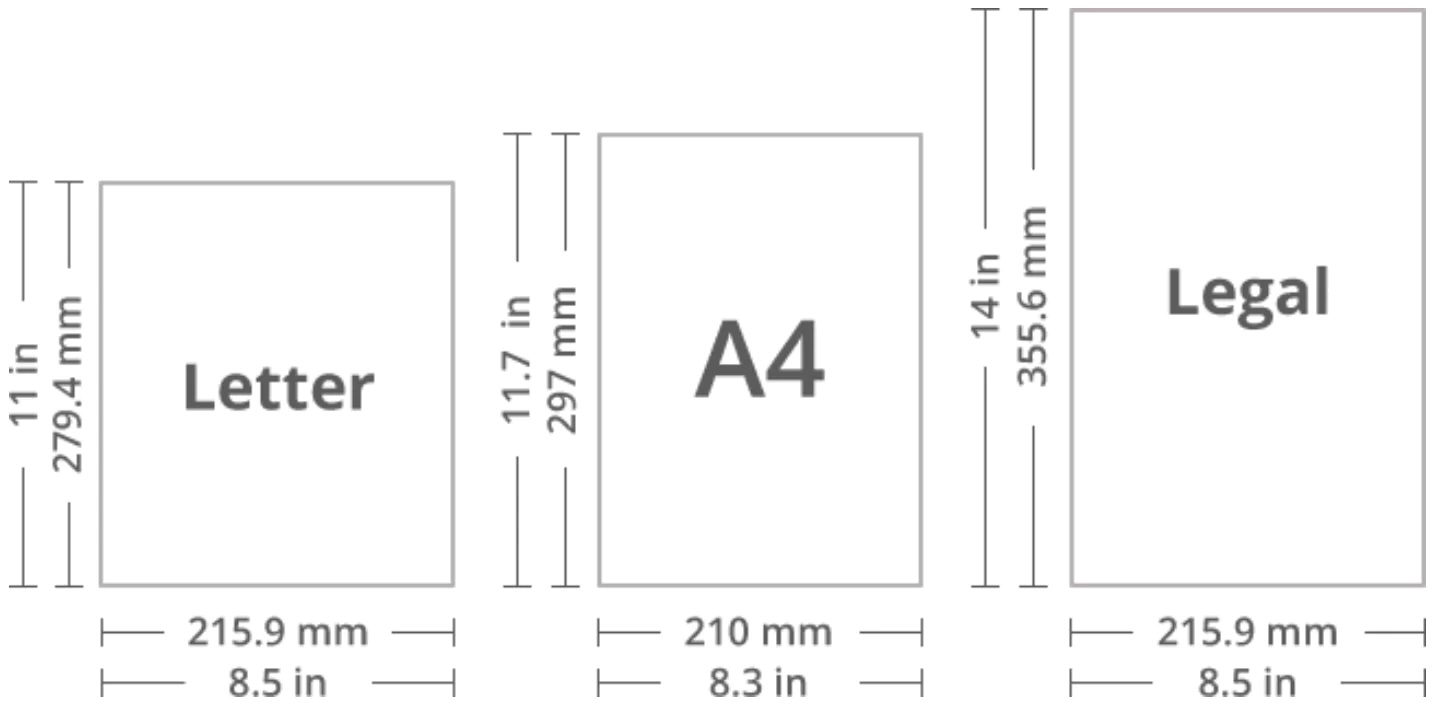
Feel free to distribute by any channel you wish:

Beyond engagement, help keep print media alive. Buy a magazine or a newspaper.

Many thanks to the instructors of this course for the many insightful discussions and readings:

ARCH 346: Anthropology of Design

The Death of Print Media

Evan Kirkiles, Spring 2024

[1] An Abridged History of Printing

1

AN ABRIDGED
HISTORY OF PRINTING

Printing from Mesopotamia to New York.

3000 BCE — 500

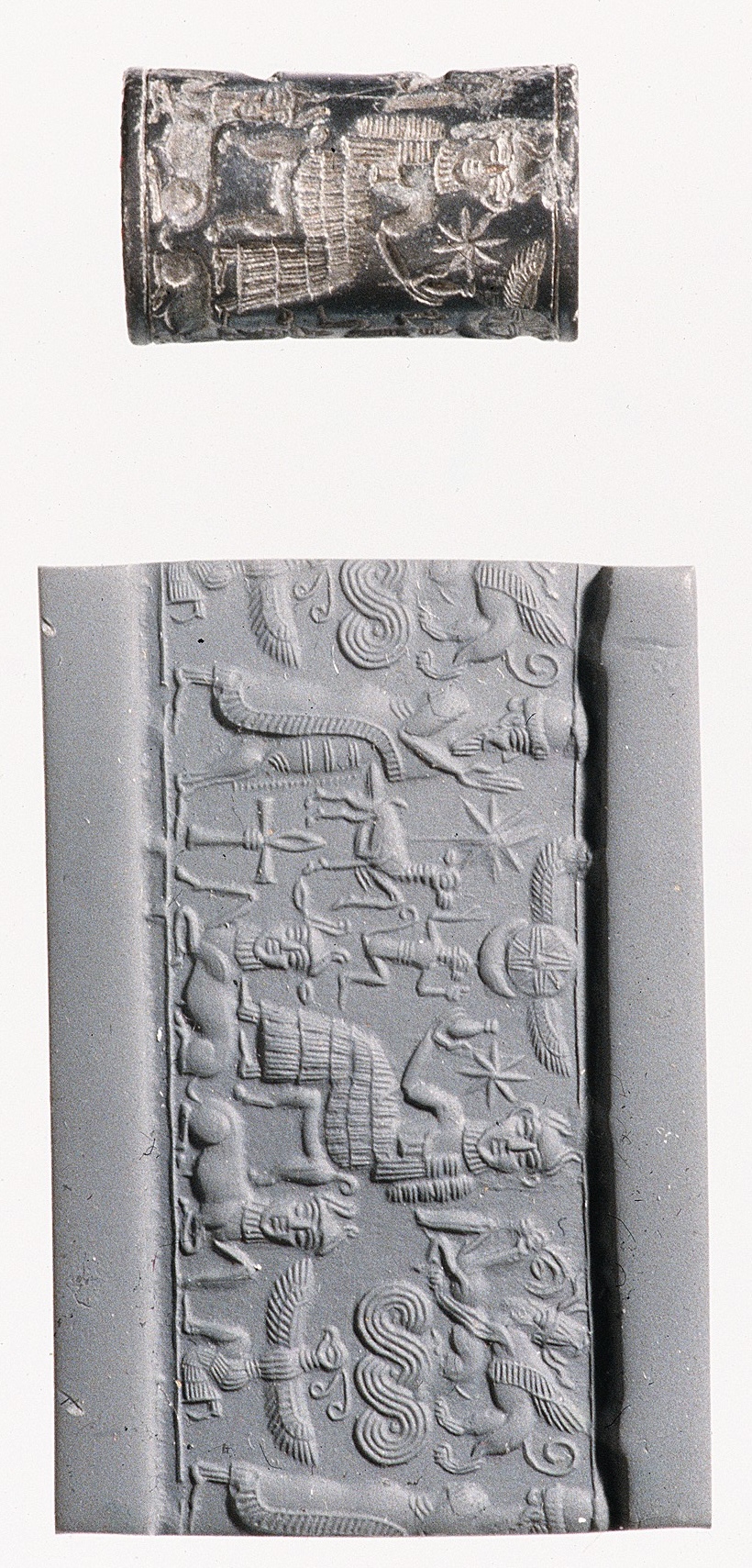
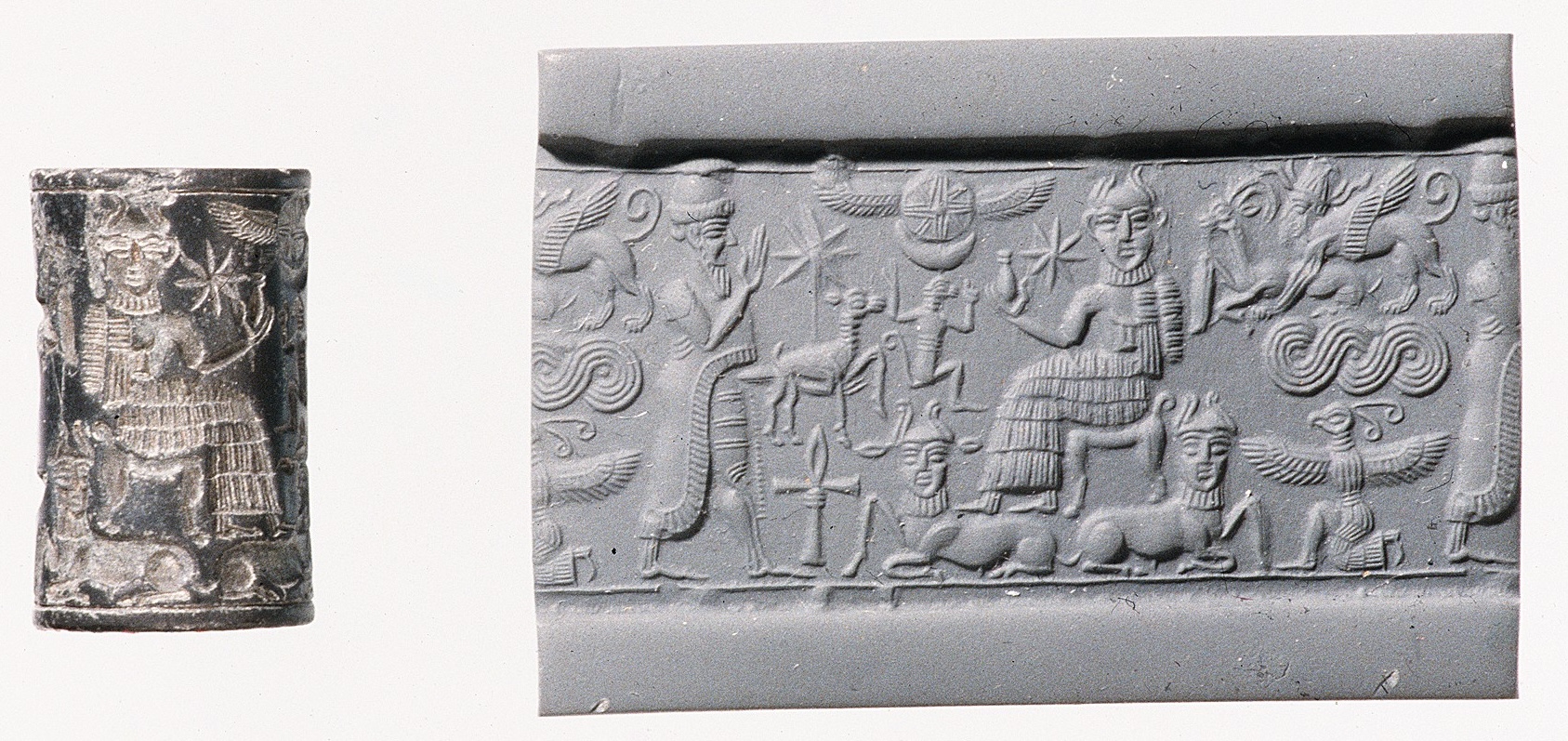
A cylinder seal and its impression

The earliest known forms of printing were in Mesopotamia and China, where cylinder seals and woodblocks were used to imprint images on surfaces as early as 3000 BCE. Cylinder seals imprinted cuneiform writing on clay, whereas woodblocks functioned like stamps for reproducing scriptures and artistic images onto cloth like silk.

500 — 1100

By the second century CE, Chinese artisans began using woodblock printing to reproduce texts and images.

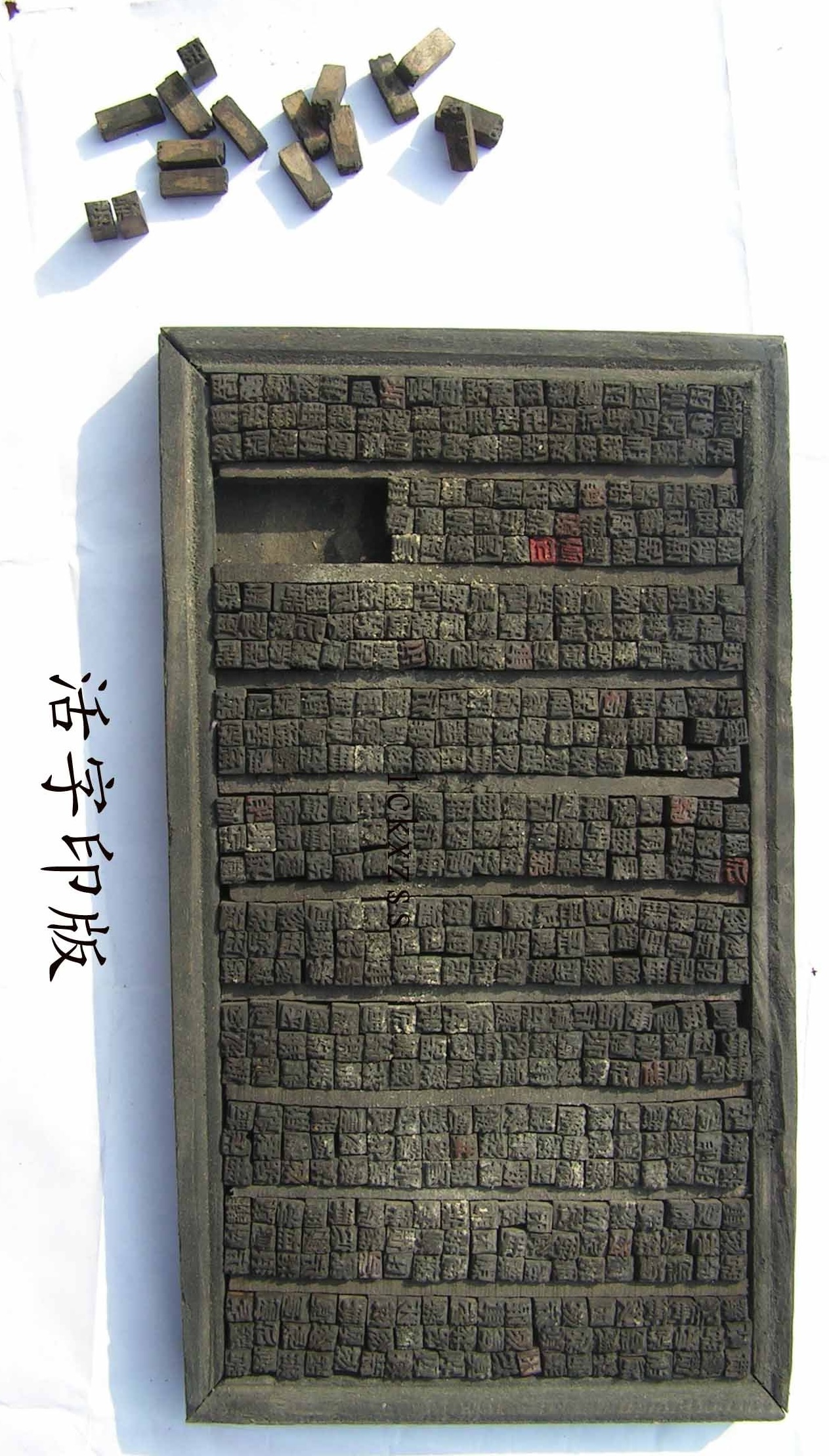
Movable type

Woodblock printing remained dominant until the 11th century CE, when Bi Sheng, a Chinese inventor, developed movable type using clay. Korea later created metal movable type in the 13th century. Instead of having to carve unique blocks for each page, movable type allowed for the reuse of individual characters, making printing more efficient—though still tedious.

Circa 1440 – 1600

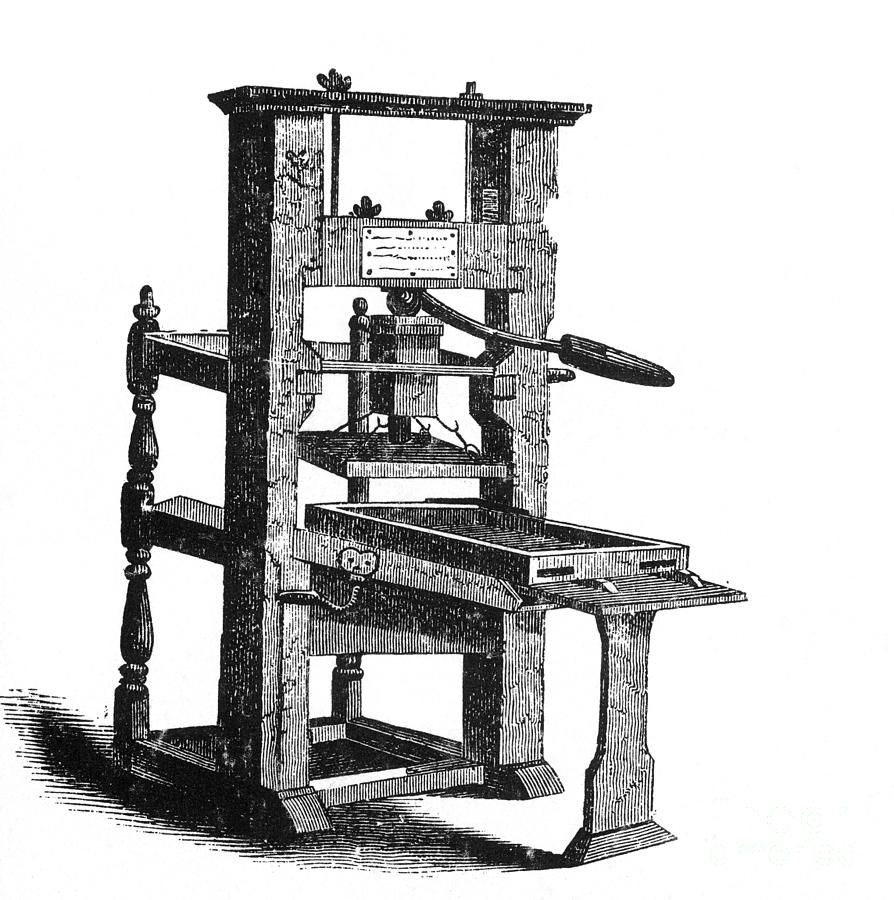
The Gutenberg Press

Around 1440, Johannes Gutenberg revolutionized printing with the popularization of a mechanical movable-type printing press, which made mass production of texts like the Gutenberg Bible possible. This set off the printing revolution in Europe, standardizing languages and democratizing access to knowledge. Compared to the Asian movable type, Gutenberg's process was mechanical, not manual, and could output up to 40 times as many pages.

1800 – 1950

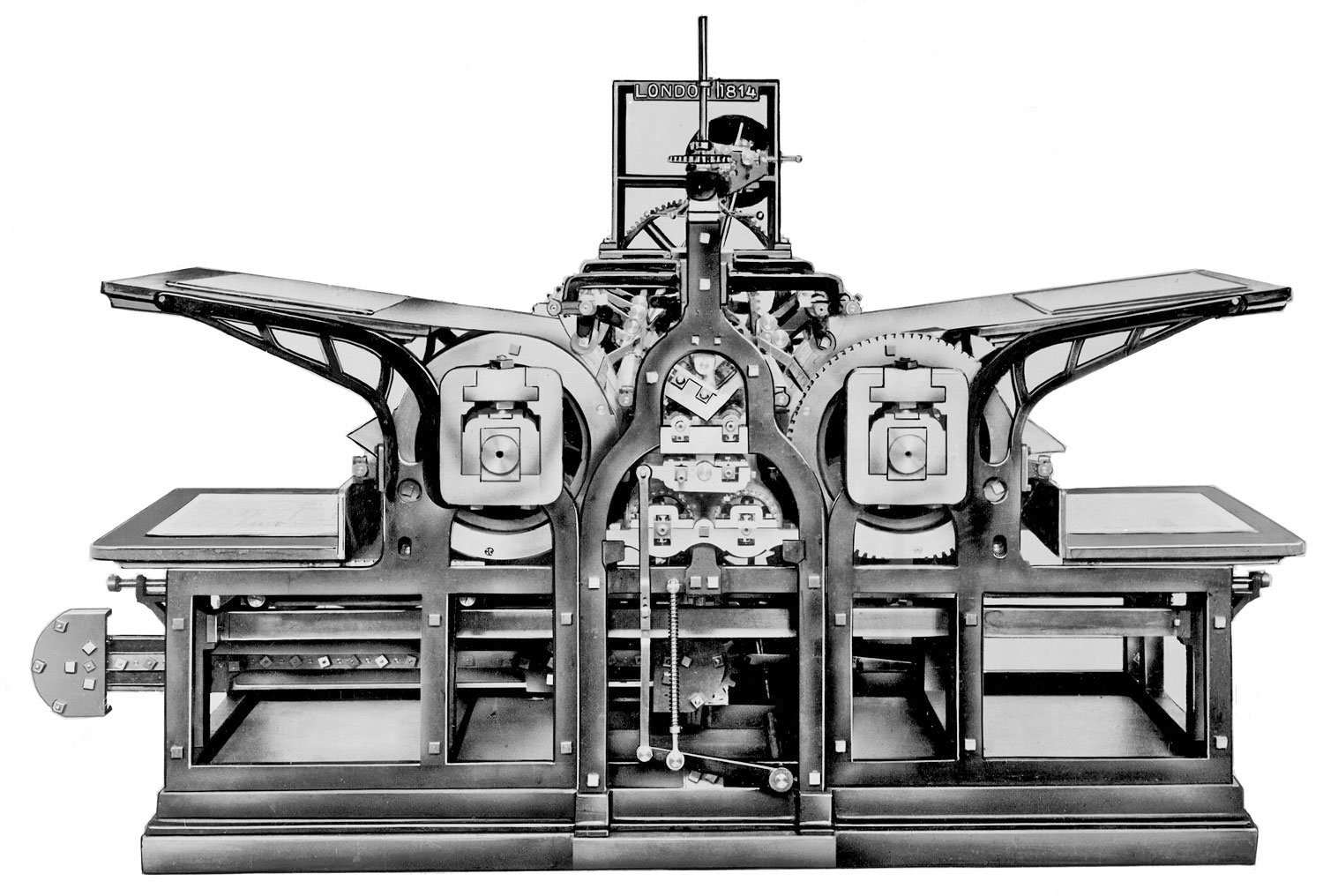
By the 19th century, the invention of steam-powered printing presses and the rotary press allowed for the mass production of newspapers, periodicals, and books, making printed media even more affordable. Literacy rates skyrocked as populations contended with this now accessible deluge of information.

A steam-powered printing press

1900 - Present

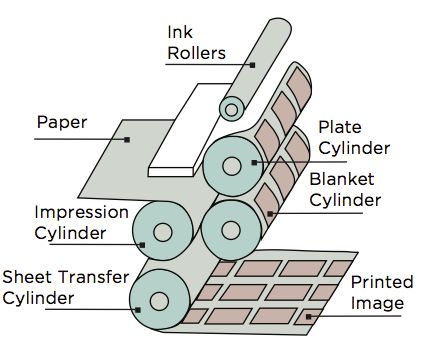
Offset lithography, or offset printing

The 20th century saw the rise of offset lithography—the process of transferring ink from a plate to a rubber blanket before printing—which soon became the dominant form of commercial printing as a result of its efficiency and cost-effectiveness. At smaller scales, the photocopier and risograph machine make printing accessible to all.

Present

Today, the capabilities of computers and digital machines have made print even easier. No longer is the letter-by-letter entry of movable type required; instead, digital files laid out with computer programs can be sent directly to a printer for automatic output with innovations like laser printing.

1

REFERENCES

  1. https://printinghistory.org/timeline/
  2. https://www.britannica.com/topic/printing-publishing

[2] Print Media Is Dying

2

Print Media is Dying

Print Media is Dying

Print Media is Dying

Print media is dying. As readers gravitate toward online platforms for their news, entertainment, and information needs, physical newspapers and magazines are increasingly dropping in both relevance and revenue. While print media once served as the cornerstone of public discourse and a primary source of knowledge, it now faces a multitude of challenges that have led to its steady decline.

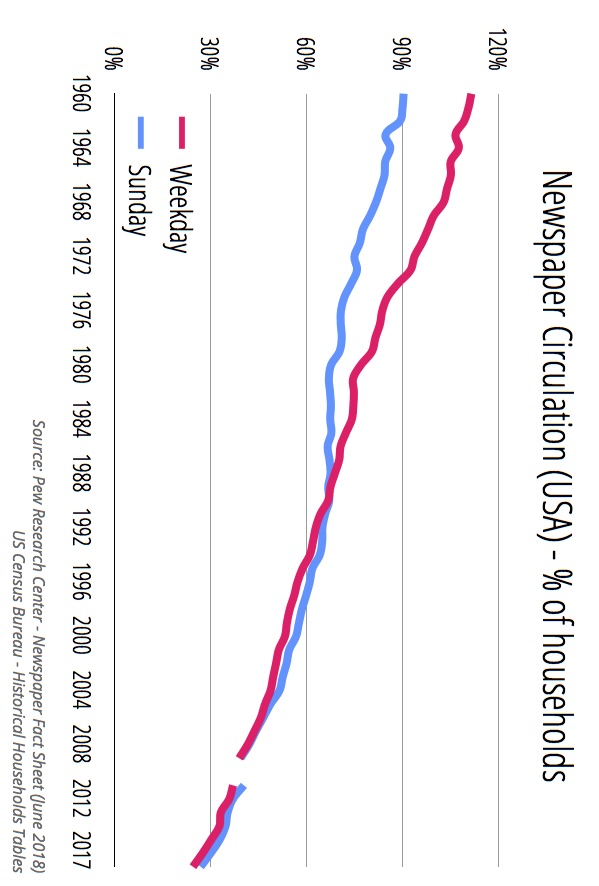
People simply do not consume information in the same way as they once did. With the proliferation of smartphones and other mobile devices, readers now expect immediate, personalized, and interactive content that print publications by definition cannot provide. Digital platforms—social media networks and online news outlets, for two—offer a level of immediacy and customization that traditional print cannot match, leading to a significant drop in newspaper and magazine readership. According to the Pew Research Center, weekday newspaper circulation has decreased by over 50% since 2008, a clear indicator of this consumer behavior shift.

Newspaper Circulation
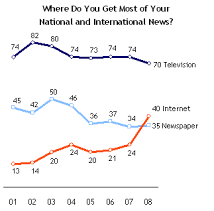
TV vs. Internet vs. Newspaper

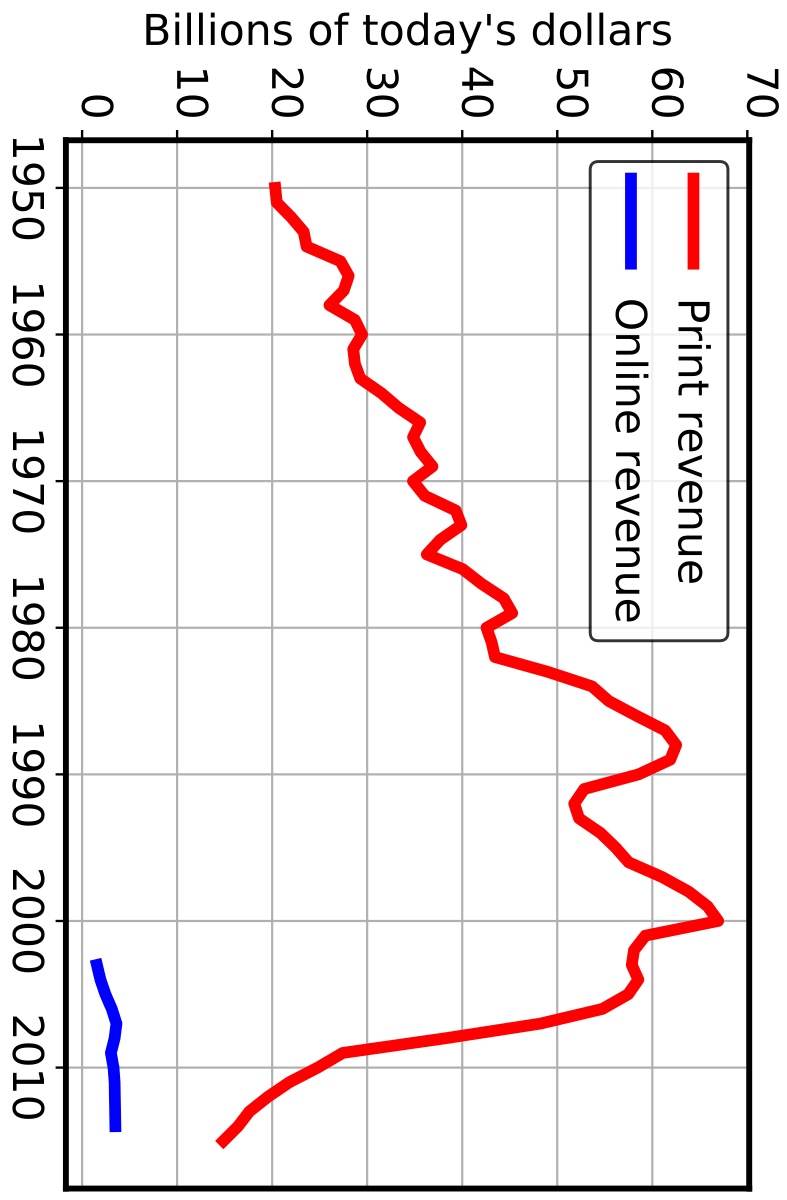
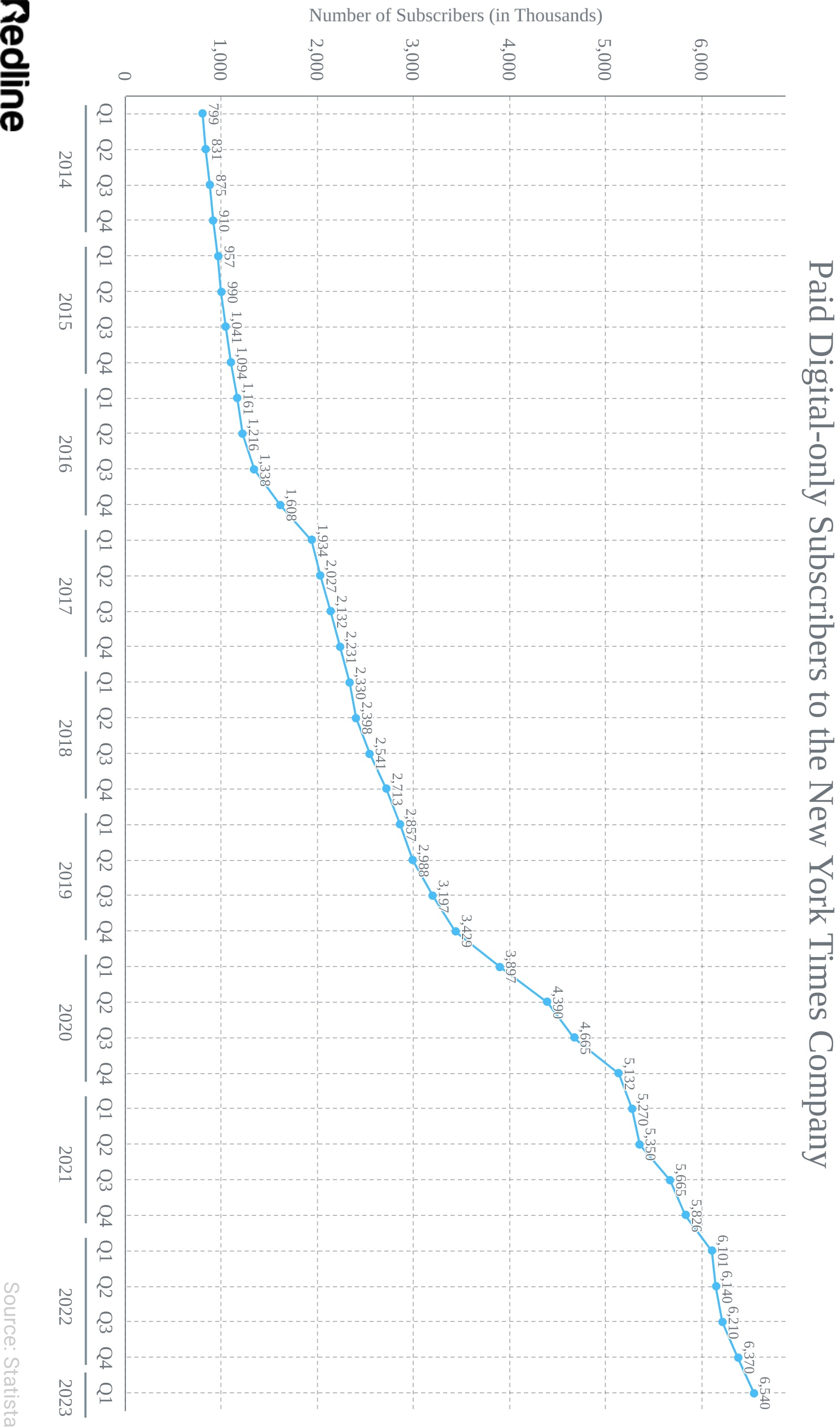
The rise of digital advertising has also severely impacted print media's traditional revenue streams. Advertisers are increasingly opting for digital platforms that offer targeted marketing options based on user data, providing a higher return on investment. As a result, there have been significant losses in advertising revenue for both newspapers and magazines, which once relied heavily on classified ads and print campaigns. Industry consolidation has further exacerbated the issue, as many media companies have downsized or gone out of business entirely due to dwindling profits.

NAA Newspaper Ad Revenue
NYT Digital Subscribers

In response to these pressures, print outlets have been forced to adapt. Some have reduced publication frequencies or transitioned entirely to digital formats to cut costs and remain competitive. However, digital advertising revenue has not fully compensated for the loss in print advertising, leaving many print companies struggling to find sustainable business models. Social media continues to disrupt the traditional news distribution model, and has become the primary source of information for many consumers, leading to a decline in engagement with conventional journalism. For print media to survive, it must find new ways to engage with the youth.

2

REFERENCES

  1. https://www.pewresearch.org/journalism/fact-sheet/newspapers
  2. https://www.marketingcharts.com/cross-media-and-traditional-231522#